

July 12, 2026
15th Sunday in Ordinary Time
Parables reveal God in everyday life: between wonder and faith, we discover the ineffable in life, where God’s love meets us.
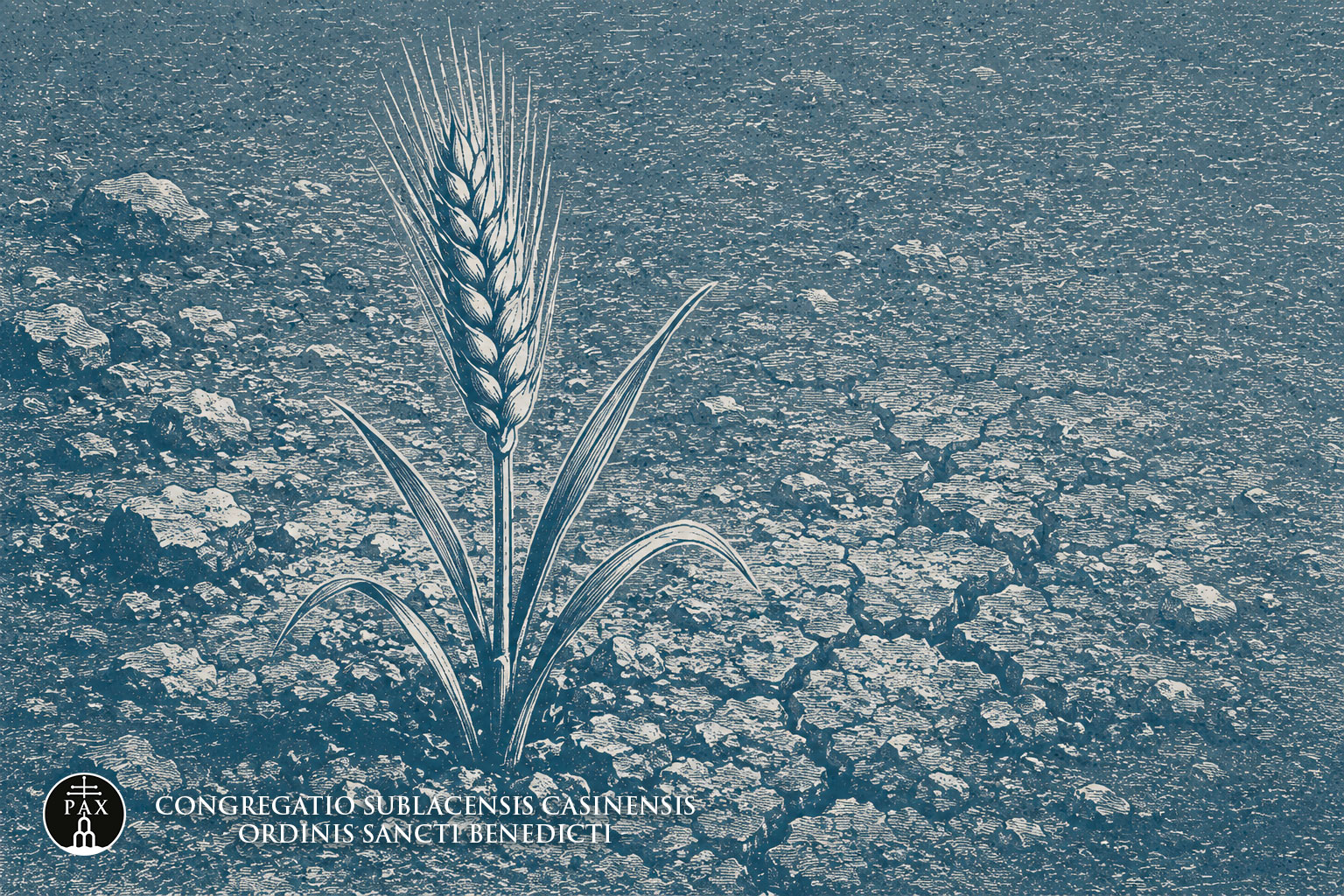
THE PARABLES
Jesus spoke in parables. Let us try to understand: Jesus did not tell edifying little stories, full of facile moralizing. No, he spoke in parables. Why? Simple: through this method of communication, he wanted above all to speak to us of God in the language of everyday life, and to help us grasp the Infinite within the fragment. Certainly, Jesus’ language is paradoxical (think of the mustard seed that becomes a huge tree), but this is intentional, to highlight that paradox dwells within our reality. And while this may unsettle us on one hand, on the other it allows us to discover a world in a different light—a world not determined by our rigid logic but above all by the Gospel mindset. Through his parables, Jesus has thus led us to discover the ineffable in the everyday, the presence of God in the flow of our days, which are sometimes monotonous or troubled by many situations that leave us feeling powerless. And when we say ineffable, we mean divine. But be careful: this is not immediate, since we often live very superficially, making it difficult to perceive the essence of things or to experience the world around us as a sanctuary without walls. And so a path emerges for us, to grasp what we have called the ineffable in everyday life. According to today’s Gospel as well, just two words: wonder, and faith. That a seed in the earth grows secretly and then appears as a stalk, an ear of grain, and a full kernel within the ear is a fact that enchants. The first to be amazed at the creation of the world was God when He saw that everything He had created was ki-tob—that is, beautiful. God then bestowed this capacity upon humanity; and when the human eye is filled with wonder, it moves the lips to song. Francis of Assisi was able to articulate the gaze and the lips so well that the Canticle of the Creatures sprang forth—the song of a reconciled world where even the enemy par excellence, death, is celebrated as a sister.
But there is also faith. Faith is not a product of our will; faith, wrote Heschel, “is a turning point in our spirit brought about by a force that transcends it. What compelled us to believe,” he concluded, “is a collision with the incredible.” In short, faith has a primacy: the love of God, which, when it reaches us, provokes a collision within us; a collision with the ineffable. Let us then study Jesus’ communicative style to discover the ineffable within us and around us ever more fully and ever more deeply. T. De Chardin wrote: “God is not far from us… but awaits us at every moment in action, in the work of the moment. In some way, He is at the tip of my pen (if I am writing), of my pickaxe (if I am working), of my needle (if I am mending), of my heart (if I am loving), of my thought (if I am thinking).” And he concluded: “By bringing the stroke, the blow, the stitch to its ultimate natural perfection (if I do well what I am doing),” I encounter God.
Commentary by d. Sandro Carotta, osb
Abbazia di Praglia (Italia)