
September 20, 2026
25th Sunday
in Ordinary Time
The Kingdom is God’s action in history: it is welcomed by doing his will and transforms the lives of those who encounter Christ.
A PARABLE OF THE KINGDOM
In Matthew 20:1–16, we encounter another parable of the Kingdom of Heaven or of God. But what do we mean by “kingdom,” a term that appears more than 120 times in the Gospels? “Kingdom” in Greek is basileia, and basileia does not refer to the place where God reigns but to the act of reigning—the authority exercised, the royal power in action. Basileia is a noun denoting action, not place; it is the exercise of kingship, not a kingdom with territories, laws, structures, and organizations. In Jesus’ time, when people spoke of the kingdom of God, they meant it in a political, territorial sense, and its establishment was understood to include the end of paying taxes to Caesar—and thus the end of Roman rule. The Messiah was supposed to guarantee all of this. But Jesus’ arrival subverts and dismantles this interpretation; his is a kingdom without land, without armies, without powers… it does not free from anything, it does not restore anything… and before Pilate, he will affirm that his kingdom does not follow the political, economic, or social logic of this world. And so, in our passage, he compares himself to a landowner who calls workers to labor in his vineyard throughout the day. We won’t delve into the text itself, but we will explore the theme of the Kingdom in greater depth.
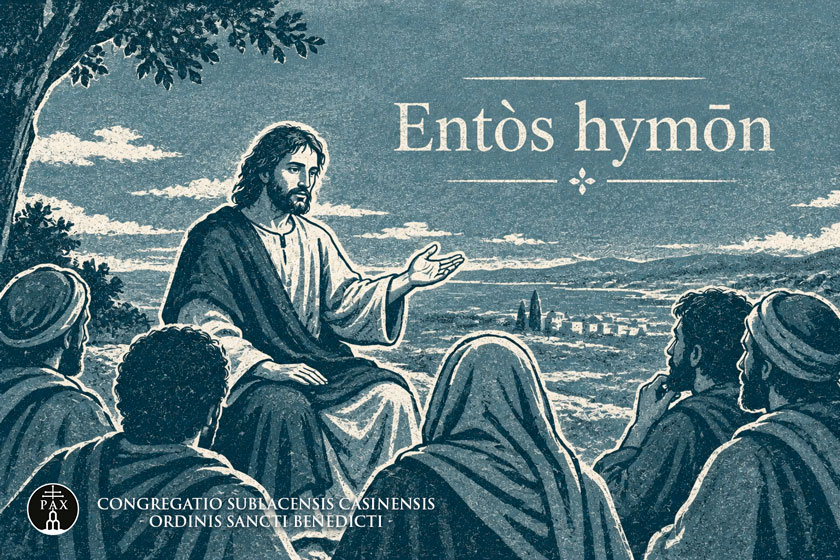
“The Kingdom of God is among you,” Jesus will say (cf. Lk 17:21). Entòs hymōn is open to three interpretations: among you (identifying the Kingdom with Jesus); within you (as an inner reality, an interpretation favored by thinkers from Origen to Tolstoy); within your reach (accessible to all). This Kingdom requires conversion—that is, the capacity for discernment to recognize it. Jesus will further explain what the Kingdom is in the Lord’s Prayer when he invites us to pray to the Father, saying, “Your kingdom come, your will be done” (Mt 6:10). These are not merely two separate requests; they are one and the same thing—that is, the Kingdom is the Father’s will fulfilled; the Kingdom is the Father’s will becoming action in the world. And this action enters the Church, homes, workplaces, public squares… wherever the Father’s will is done, there the Kingdom is established.
But that is not all: the Kingdom is also Jesus, as we have said—his life, his words, his silences, his actions, and his self-offering on the cross and in the resurrection. The greatest tragedy of Christianity, then, is when the Kingdom becomes a mere place and faith a mere assurance. The Kingdom came with Jesus; it then grew unexpectedly like a mustard seed, permeated like leaven, spread, and continues to spread even today in silence. He called fishermen from Galilee, fraudulent tax collectors, thieves, and prostitutes—people without credentials, people who had been cast aside. And these people have spread the Kingdom far and wide, not so much through eloquent speech as through the evidence of a transformed life.
Commentary by d. Sandro Carotta, osb
Abbazia di Praglia (Italia)