
September 6, 2026
23rd Sunday
in Ordinary Time
Fraternity is preserved through correction, dialogue, and prayer: even amid the community’s wounds, Christ makes unity possible.
THE RESPONSIBILITY OF THE BROTHER
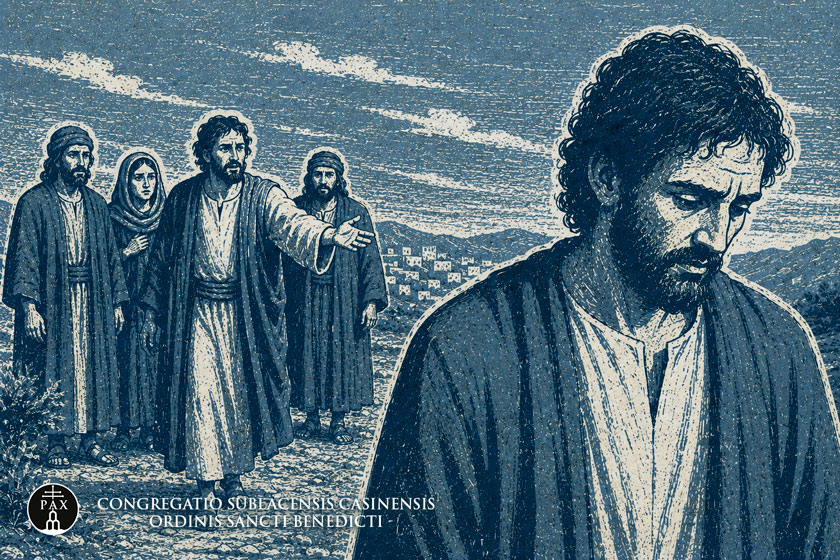
“In the beginning, God created the heavens and the earth” (Gen 1:1). Bere’shit (“In the beginning”) is the first word with which biblical revelation opens. Millennia of exegesis have not yet exhausted all its richness and its countless meanings. It is now well established, however, that the expression is not so much to be understood as the temporal beginning of creation as the origin that reveals meaning. By going “back to the beginning,” we understand how reality, in its original structure, has a profound relationship with God, its native Source and its ultimate Meaning. In the first pages of Genesis, creation takes place through acts of separation: the earth from the heavens, night from day… Creation thus affirms difference. Not only that, but creation sees the emergence of difference as a value. History, however, has experienced the struggle of humanity to recognize this. In fact, throughout its course (and up to the present day), we have unfortunately witnessed the alternating encounter and conflict between God and humankind, between man and woman, between brother and brother, between son and father, and between people and people. But why is accepting otherness among humans so problematic and difficult? And what path is possible to restore brotherhood? Today’s Gospel passage offers us some valuable insights. Matthew presents the life of the Christian community with great realism, without downplaying the conflicts and tensions that can arise within it. In 18:15–20, he highlights how to restore a brother who has sinned. The first step is admonition.If it is accepted, and a relationship is established, the brother is restored. But there may also be stubbornness, in which case one must try again together with some brothers.If even this attempt fails,then the community must intervene.But there may be cases where even the community fails. Then Matthew writes: “If he will not listen even to the community, treat him as you would a pagan or a tax collector” (cf. Mt 18:17). At the ecclesial level, this expression indicates the act of excommunication. It is not a formula of condemnation but the recognition of a broken communion, a severed bond, a rift in the community. From this comes an important insight: prayer, in which we experience not only the Father’s goodness but also the Lord’s presence at the heart of community life. In him, unity is always possible.
Commentary by d. Sandro Carotta, osb
Abbazia di Praglia (Italia)