
August 30, 2026
22nd Sunday
in Ordinary Time
Following Jesus requires self-denial: stepping out of selfishness to find one’s place in the whole and to live in true and free relationships.
LOSING ONESELVES
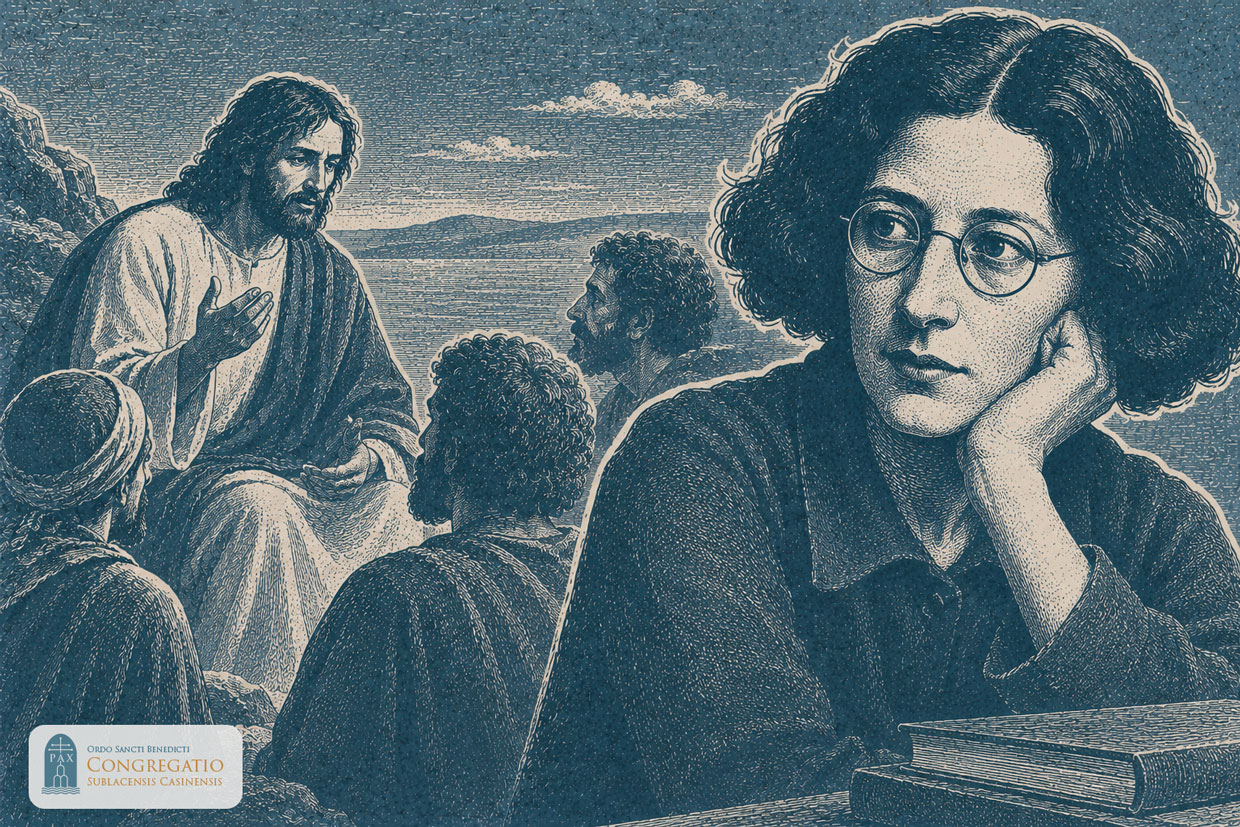
Jesus’ words are extremely radical. Of those who wish to follow him, he asks for self-denial and the taking up of the cross. Let us pause to consider the first condition: “If anyone wishes to come after me, let him deny himself” (Mt 16:24). What does Jesus mean by self-denial? Simply that the disciple no longer looks out for his own interests, no longer thinks of himself, just as the Master, forgetting himself, always keeps his mission and the fulfillment of the Father’s plan in mind. Simone Weil wrote on this subject: “When one recognizes oneself as nothing, then one finds one’s place in the whole.” Yes, if the self, my self, is always at the center, there is disorder within me and around me; harmony is lacking. If I reposition myself where I ought to be—and this within interpersonal relationships—everything falls into place, and I am at peace. Christian discipleship, then, brings about the loss of the self; that exalted self which in reality never enriches but always isolates, and whose signs of imbalance can be found in the excessive insecurities of daily life, in phobias that risk becoming obsessive, in suspicion toward everything and everyone, and thus in the fear that makes us violent. And there is so much violence among us, sometimes beginning with as little as a simple glance. Faith entails the willingness to embrace evangelical loss,as we have said, so that the newness of the Gospel may be the breath of our days. Let us ask ourselves: what would happen to our lives if we stopped interpreting every absence as a void and thus avoided jostling to have everything and be above others; if we stopped interpreting every lack as a void to be filled and thus knew how to live in anticipation. What would that be? Following Christ then entails a passage through irreversible loss, the loss of thinking and wanting at all costs to always be at the center of the relational universe. Are we then willing, for Christ’s sake, to lose what we defend most in order to find our place in the whole?
Commentary by d. Sandro Carotta, osb
Abbazia di Praglia (Italia)