

August 23, 2026
21st Sunday
in Ordinary Time
Peter confesses Jesus as the Son of the living God: the Church is born of this faith and remains steadfast if guided by God, not by human interests.
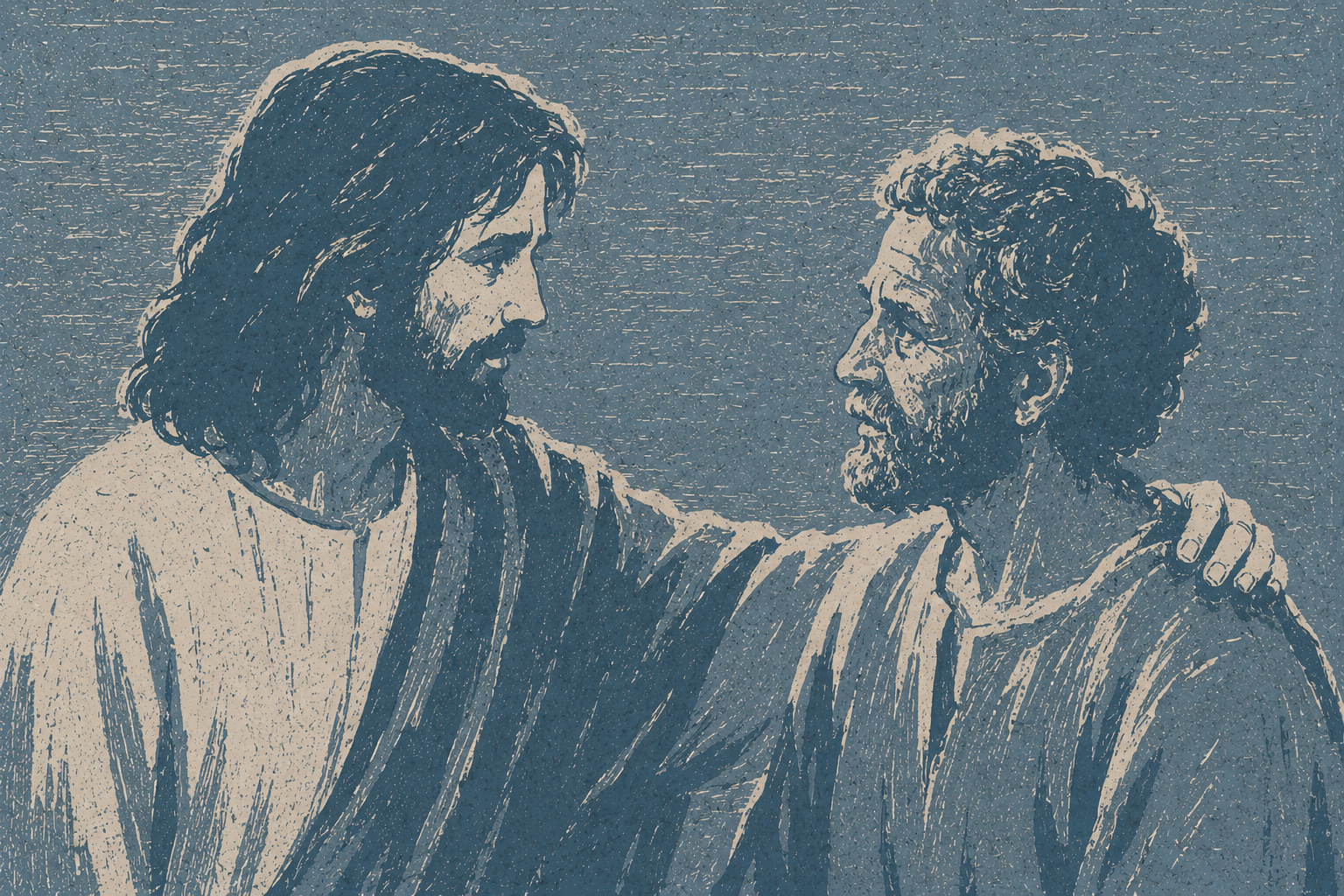
THE FOUNDATION OF THE CHURCH
Jesus’ question, “Who do you say that I am?” (Mt 16:15), is met with various answers. For some, Jesus is John the Baptist—that is, a great ascetic; for others, Elijah, the prophet who fought against idolatry. Then there are those who recognize in Jesus a new Jeremiah, a righteous man who suffers. Finally, Peter steps forward with his profession of faith: “You are the Christ, the Son of the living God” (Mt 16:16). For Peter, Jesus is the Messiah (Christ) who brings salvation and therefore freedom. Not only that, but also the Son of the living God (theós zôon), the Son of a God who lives, continually generates life, acts in time and history, and brings fruitfulness to events and situations. This is an important point because it helps us understand that it is not enough to make fine professions of faith; it is necessary to experience what one believes and professes. Jesus then calls Peter “blessed” and says to him: “You are Peter, and on this rock I will build my Church, and the gates of hell shall not prevail against it” (Mt 16:18). In its interpretation, the Eastern Church follows Origen’s reading, namely that the rock upon which Jesus—and no one else—builds the Church is Peter’s faith, not his person. Augustine, however, interprets it differently, affirming that the rock upon which the Church is built is Christ himself. The Apostle Paul will in fact call Christ “the rock” (cf. 1 Cor 10:4). If Peter and Jesus’ disciples were to be inspired not from above but by flesh and blood—that is, by human interests—the Church would no longer serve the Lord but another master. If Peter and Jesus’ disciples were to be inspired by a thirst for domination and power, they would no longer be a solid foundation upon which humanity could build its salvation, but would become a stumbling block and a cause of offense. If Peter and Jesus’ disciples were to remain silent in the face of governmental injustices, the arrogance of the rich, and unjust and inequitable laws, there would no longer be the Church of Jesus, but of another. But even if Peter and Jesus’ disciples were to betray their mission, God will never allow a single fragment of humanity inspired from above to be lacking, so that the Church of Jesus may be a prophetic presence in the world.
Commentary by d. Sandro Carotta, osb
Abbazia di Praglia (Italia)