
July 19, 2026
16th Sunday in Ordinary Time
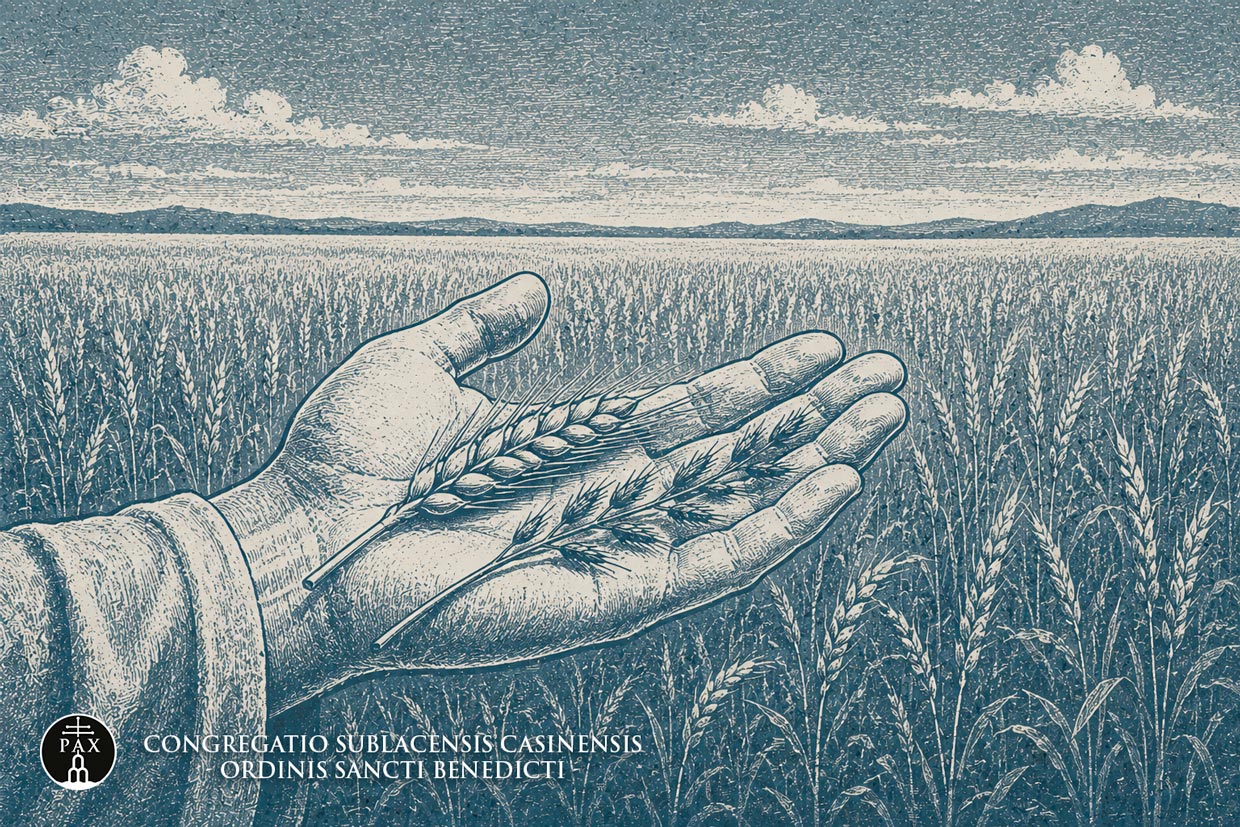
Wheat and weeds grow together: in the community and in the heart, patience and vigilance are needed so that the good may mature without breaking unity.
DO NOT UPROOT BUT LET GROW
The famous parable of the weeds is unique to Matthew. We can interpret it in various ways. First and foremost, we can apply it to the community. As is well known, Matthew’s Christian community was made up of Jews from the Jewish tradition and so-called pagans—that is, people from the various cultures of the time. It is evident that there were differences, for example, in the observance of the Torah; the former were more rigorous, the latter more open to the Gospel’s new message. It was therefore necessary for everyone to cultivate patience so as not to break the fraternal unity, which for Luke is one of the strong points of the new faith (cf. Acts 2:42–48). The parable can also be seen as an icon of the human soul. Good and bad feelings, the wheat and the weeds, live in the heart. If we were to pull out the weeds, we would risk pulling out the good wheat as well. Only if they grow together will the good wheat flourish. This, of course, does not mean letting the weeds grow without any intervention, for that would compromise the wheat.
Jesus’ teaching is rooted in Jewish tradition. When tradition commented on the verse of the Shema: “You shall love the Lord your God with all your heart” (Deut 6:5), it focused on the heart (leb), a term that represents the whole person as well as that part of his being “in which God manifests himself” (J. Behm). If this is true—and it is—it is with the heart that man listens to God, to his word (cf. Is 40:2). Certainly, the heart is unfathomable and incurable, according to Jeremiah (cf. Jer 17:9), but this is not so for God, who created it, knows it deeply (cf. Ps 33:15; Prov 21:1–2), and scrutinizes it with care and love (cf. Jer 11:20). For the Sages of Israel, loving God with all one’s heart means loving him with both one’s good and bad instincts. This dichotomy is present in man. Man aspires to the good but is also drawn to evil. Evil, too, exerts a fascination on his heart. Hence the need to watch over one’s inclinations, strengthening the positive ones until the negative ones are fully absorbed.
Commentary by d. Sandro Carotta, osb
Abbazia di Praglia (Italia)