

November 22, 2026
Christ
the King
Christ is present in the faces of the poorest: to recognize him means to welcome and love them through concrete actions, not just words.
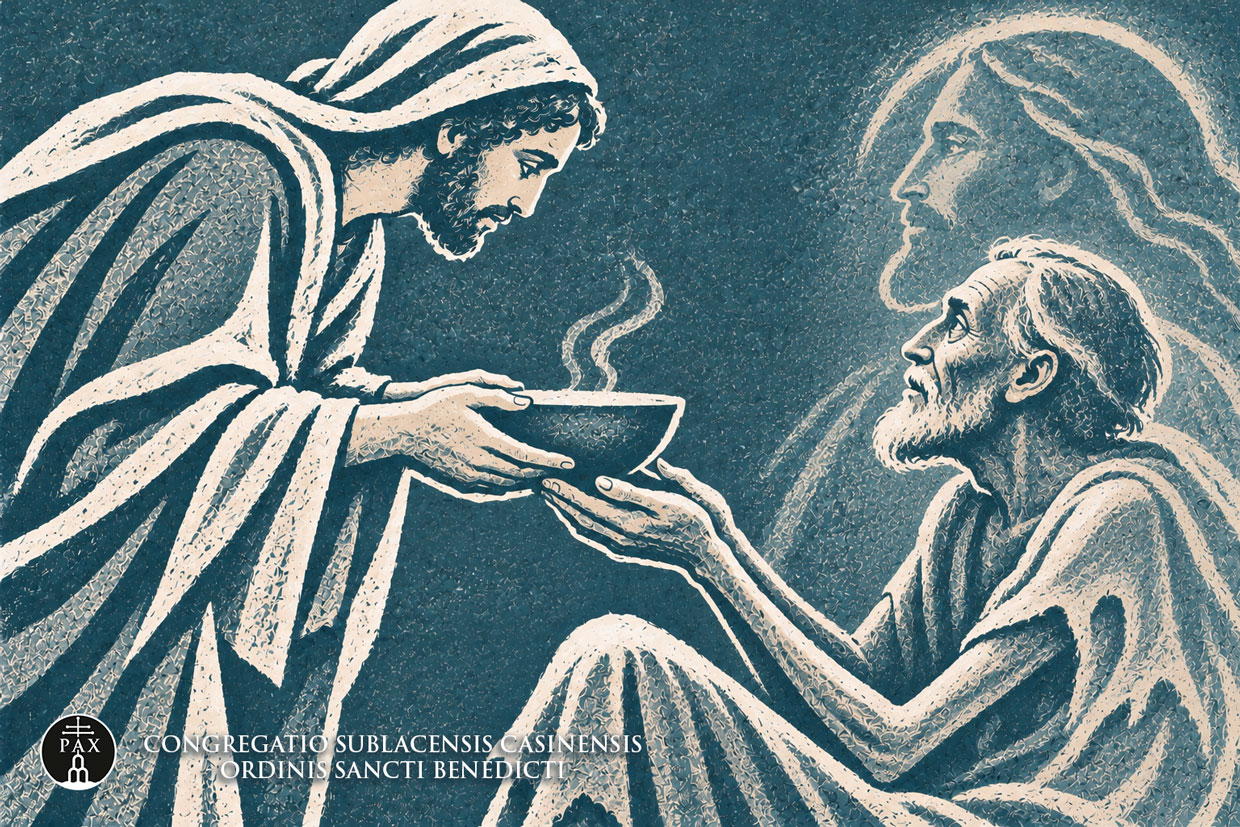
THE FACE AS A SACRAMENT
“Truly I tell you, whatever you did for one of the least of these brothers and sisters of mine, you did for me” (Mt 25:40). Emmanuel Levinas commented: “I find that there is more transubstantiation in this verse than in the bread and wine.” For the philosopher, the presence of Christ—alive and contemporary—is experienced in the ethical act of relating to the other. The flesh of Christ is the vulnerable flesh of the other, especially if that other is destitute and therefore marginalized. The sudden appearance of the face—in its total nakedness and weakness—unsets and challenges our selfishness and self-sufficiency. Thus, the face is a call, a responsibility, an imperative, for it imposes a commandment: “You shall not kill”—that is, in Levinas’s interpretation, do not leave the other alone in their mortality.
The judge in the parable is called the Son of Man and King, and the setting is solemn. But this king is Jesus of Nazareth, whom we know to have died, been crucified, and risen. In his life, he shared in every aspect of the human condition: hunger, nakedness, judgment, loneliness, derision… a king, therefore, who identified with the least of these. Even in his role as universal judge, he does not depart from this logic of solidarity. This king continues to live in time in the guise of his least brothers and sisters.
Matthew, in his Gospel, reminded us that at the final judgment, people will be judged on the basis of their concrete choices (cf. Mt 16:27), even by the words they have spoken (cf. Mt 12:36). Here, however, the judgment centers on the ability—or refusal—to welcome the poorest among our brothers and sisters. A welcome that is not merely ideal but concrete. And here we have a great lesson to reflect upon: the essence of the Christian life is not to confess Christ in words, but to bear witness to him through the practice of concrete love toward those in need. This is the will of the Father. Whoever enters into this already reigns with Christ.
Commentary by d. Sandro Carotta, osb
Abbazia di Praglia (Italia)