

November 15, 2026
33rd Sunday
in Ordinary Time
God’s loving gaze frees us from fear and teaches us to recognize and put to good use, with trust and wisdom, the gifts we have received.
THE TALENTS
Where does the negative reaction of the third servant in the parable—who fails to put the talent he received to good use—come from? Among the many reasons, we highlight one: low self-esteem.. It is important to understand that low self-esteem stems from a form of negative selfishness that binds the individual to his sin and his limitations, ultimately crushing him under his own fears or perceived powerlessness. To emerge from this tunnel, it is vital to rediscover the Word of God, which gradually replaces the lies of the inner accuser with divine truth—a truth that is always liberating and uplifting. Alongside this, it is equally important to rediscover prayer in order to learn to view oneself from God’s perspective, rather than from one’s own or others’.
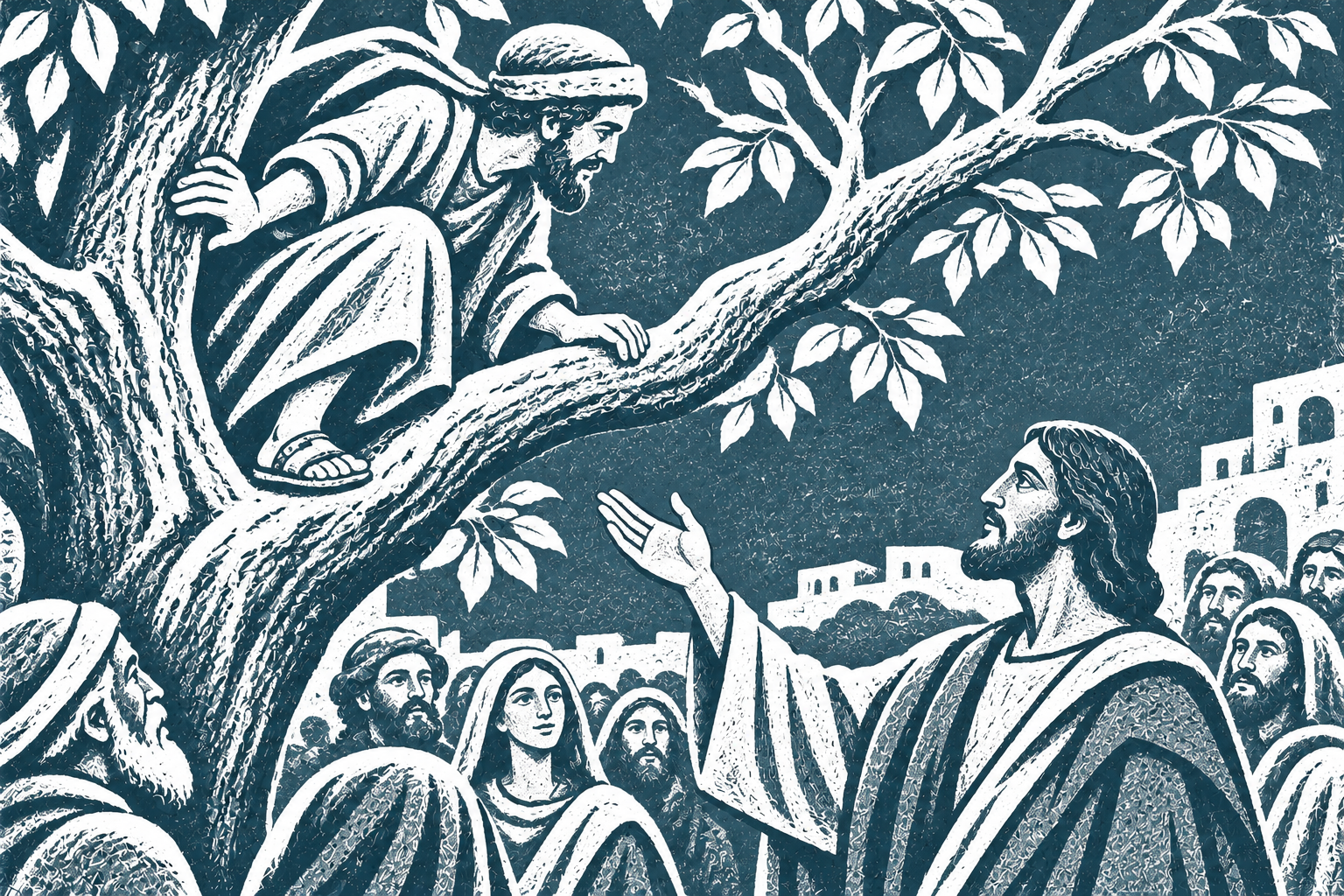
The Scriptures offer us two examples in this regard. The first is that of Mephibosheth or Meri Baal (cf. 2 Sam 9), the son of Jonathan who was left crippled by a childhood injury. This disability had led him to consider himself a dead dog—and thus a person unworthy of anything or anyone. But David performs a miracle by inviting him to his table and restoring his rights. This selfless and attentive love puts him back on his feet. In the New Testament, on the other hand, we have the figure of Zacchaeus (cf. Luke 19:1–10). He was short in stature and felt small on the inside. Moreover, because of his profession, he was widely despised. Jesus heals him by looking at him with love and allowing himself to be invited to his table (with all the religious implications that this gesture entailed).
It is therefore necessary to believe in ourselves and bring to fruition the talents we possess. There is a Greek, Aristotelian concept that sheds light on this:eudaimonia.It is a word derived from *eu*, meaning “good,” and *daimon*, “daemon” in the sense of vocation, disposition, or talent.Eudaimonia is therefore the successful fulfillment of the daimon , and thus of one’s own happiness. But there are two conditions. First, we must know ourselves—what God has sown within us as potential—and then, once we have understood who we are and the potential that dwells within us, we must do everything katàmétron , that is , in moderation. We cannot desire what is impossible, but we must desire what is achievable in moderation, with wisdom, and thus with common sense.
Commentary by d. Sandro Carotta, osb
Abbazia di Praglia (Italia)