

May 17, 2026
The Ascension
of the Lord
Man is restless, between the finite and the infinite; in Christ heaven and earth are united. The Risen one is awaited, but already dwells in our hearts as living presence.
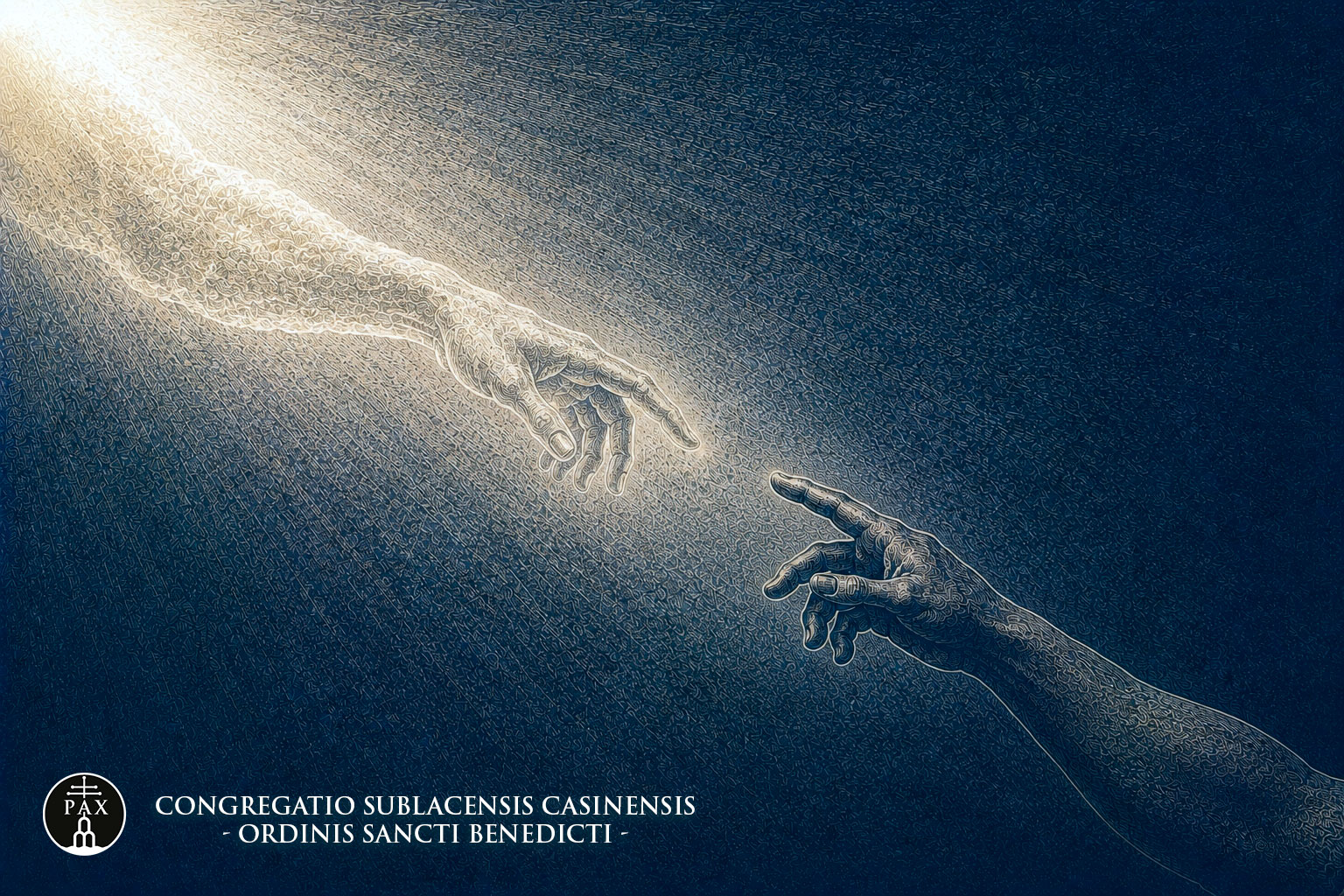
NOSTALGIA FOR THE DIVINE
Man is happy when he realises that God
is not somewhere else but is speaking to him.
F. Hegel
Friedrich Hegel, the well-known thinker, used to ask himself, “Why are we unhappy?” Man is unhappy because he is existentially situated between the finite and the infinite, between the feeling of reality and of desire, which draws him always to the other. In a word: human consciousness is unhappy because man experiences the limits of reality and the infinity of desire. Whence the yearning to transcend. That explains, in antiquity, the myth of Prometheus, or, to remain in Hegel’s era, Goethe’s Faust, who does not hesitate to sell his own soul to Mephistopheles in an attempt to savour eternity for a while. He most famously expresses this in the words, “Stay, moment! You are so beautiful!” Still on the same wavelength, consider Mary Shelley’s gothic novel “Frankenstein” in which the crossing over in this case is not mythical, nor through demonic force but through nature, through electrical energy (a discovery proper to that time). It is notable that the Greek world had no notion of transcendence; the world has always existed and always will do so, to the point that people speak of Pantheism (God is reality itself). It is only through Judaeo-Christian revelation that God is transcendent. And this represents an enormous step towards the concept of God as other, because it points to a gap, a difference: God is up there and man is down here. It’s like a condemnation because God appears to be distant, impossible to connect with. Hence the nostalgia, the grief of absence. That all changed when the Jesus Christ of God became man, so that man might – through grace – become God. In him, heaven came down to earth, Hegel once more points out. Of this mystery the good news is the resurrection. In Jesus, true God and true man, it seems that the human tension is allayed, but not for long, because after the resurrection he ascends to heaven. The presence of the divine in history is solely the presence of the Spirit, who with the community of believers, not by chance, calls for the return of the beloved Lord: “Marana-tha!” (Come, Lord Jesus!) (Rev. 22: 20). The believer therefore still lives the nostalgia for the divine, and waits, calling out for the fulfilment of his every aspiration: Christ Jesus. But in this waiting he does not only and always gaze upwards, but equally looks into the depths of his soul, because God dwells there, the glorified Jesus is present there. Did not the Master once say, “The Kingdom of God is within you”? (Lk. 17: 21). Through whom, and so that we may have the deep meaning of the Ascension: the Infinite is in the finite, Heaven is on earth. And thus there grows in the believer the consciousness of his own divine origin.
Commentary by d. Sandro Carotta, osb
Abbazia di Praglia (Italia)
Translation by b. Giles Conacher
Pluscarden Abbey (Scotland – UK)