
September 13, 2026
24th Sunday
in Ordinary Time
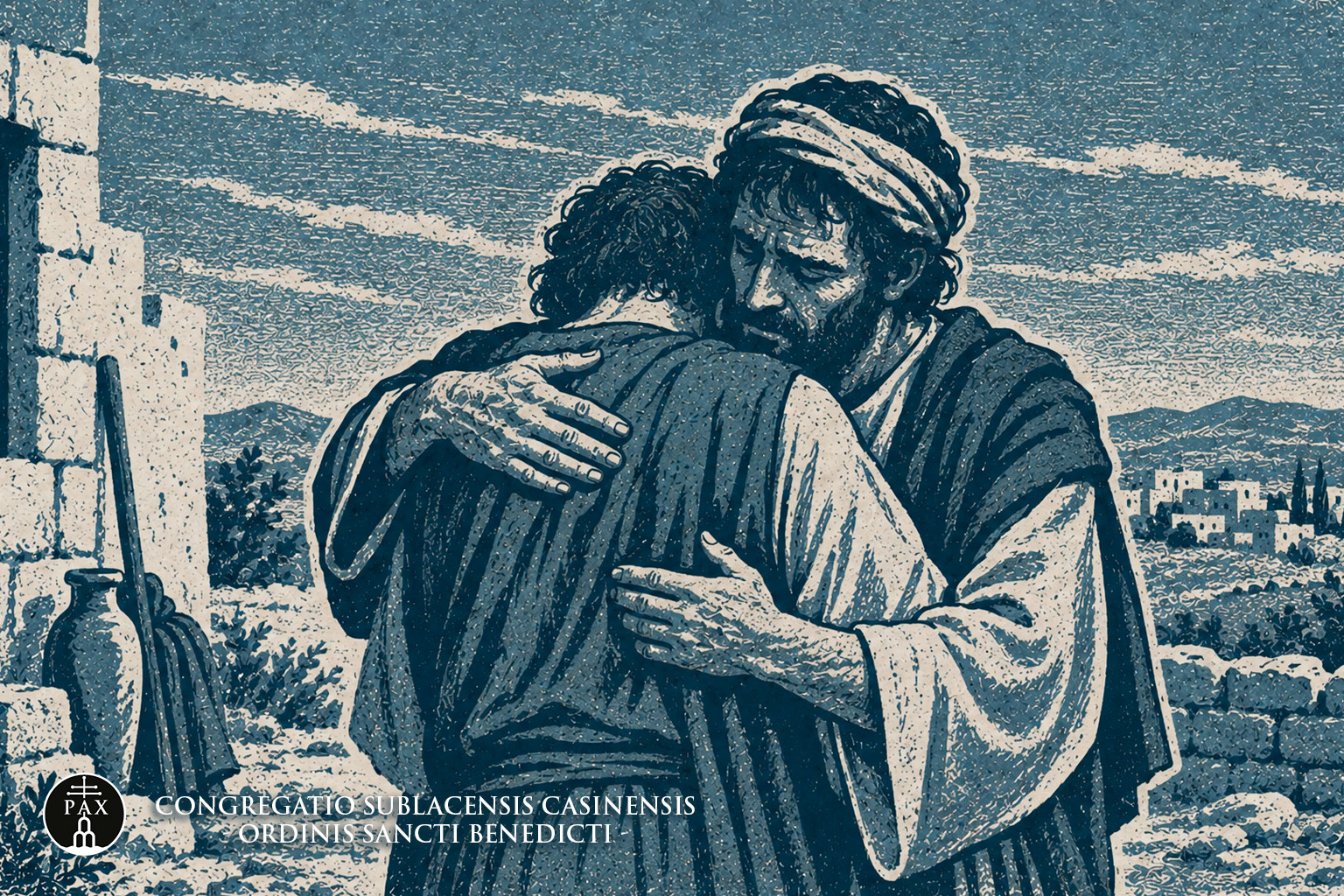
Forgiveness is a complete gift: it frees us from resentment, breaks the cycle of violence, and, with God’s grace, transforms hatred into love.
SEVENTY TIMES SEVEN
But what do we mean by forgiveness? To forgive is not to condone. Condoning is the renunciation of the right to demand compensation. Nor is it forgetting, which is often merely a psychological strategy to suppress the pain. The word “forgiveness” comes from the Latin *per-dono*. In Latin, *per* means “fulfillment.” Forgiveness is a perfect, total gift. It is the greatest gift we give to those who have wronged us; it is also a gift we give to ourselves. Yes, because if we do not forgive: resentment weighs us down, exhausts us, and leads us to depression; anger corrodes our body and mind; hatred robs us of our freedom; and revenge destroys us. As Christians, we are called to live out forgiveness. But before delving into this specifically, I would like to highlight three difficulties we experience—from an anthropological perspective—in giving and receiving forgiveness. The difficulty in forgiving is a moment of great truth. In that moment, we realize that an instinct for aggression exists within us. The difficulty in forgiving puts the myth of the “good self”—the one who loves God and neighbor—into perspective… Unfortunately, there is violence within us, and this violence must be acknowledged. To forgive means to renounce blackmail, to lay down the weapons of retaliation or revenge, and to refrain from taking the law into one’s own hands; to forgive means to break the cycle of violence. The instinct to dominate leads us to want to rule over and prevail against others, to influence, command, or forbid. By satisfying this instinct, we believe ourselves to be all-powerful. Those who live dominated by this instinct see forgiveness as an experience of dependence. Therefore, it is rejected. When we forgive, we depend on the other person—on their power, on their unpredictability (they may or may not accept forgiveness). This is frightening, so we defend ourselves by justifying our actions this way: “I’ll act aloof—that’ll teach them… I won’t speak to them—that way, next time they’ll be more careful… I have to make them understand that they’ve hurt me, because I, too, have my dignity.” And so on. Each of us has a generally positive self-image, so if it is tarnished in any way, we feel hurt. But here we need to make a distinction. Often, those who call us out have no intention of striking at the very core of our being; their criticism focuses on our attitudes and words. Our attitudes, even though they are part of who we are, can never define us at our deepest core. In any case, the difficulty in forgiving in this situation stems from the exaggerated esteem we have for ourselves. To achieve forgiveness, we must avoid four mistakes: forgiveness without the heart. Jesus, in the Gospel (cf. Mt 18), invites his disciples to forgive always—seventy times seven—and with all their hearts. If we do not forgive with our hearts, we cultivate the deadly seed of resentment. Resentment possesses incredible power and can transform into a violent and destructive force even years later; forgiveness without history. It is through history that we become separated, and it is through history that we are called to reconcile. This, however, takes time and must happen gradually. Forgiveness cannot be immediate (see the story of Joseph in Gen 37–50); forgiveness without words. Forgiveness involves action and words because it is an event between two people—never a solitary event; forgiveness without grace. Christian forgiveness is not merely a re r rebalancing of broken bonds. We need God’s grace to live out forgiveness, to call those who have offended us—those who have declared themselves our enemies—brother and sister. There is an important aspect of Christian forgiveness that highlights the need for grace. In Christianity, it is not (only) the perpetrator who must be converted, but the victim as well. In what sense? The victim is called to transform hatred into love, revenge into forgiveness; the victim is called not to confuse sin with the sinner, distinguishing evil (which must always be denounced) from the one who committed it. It is not easy, but it is what the Gospel demands of those who wish to be disciples of Christ.
Commentary by d. Sandro Carotta, osb
Abbazia di Praglia (Italia)